
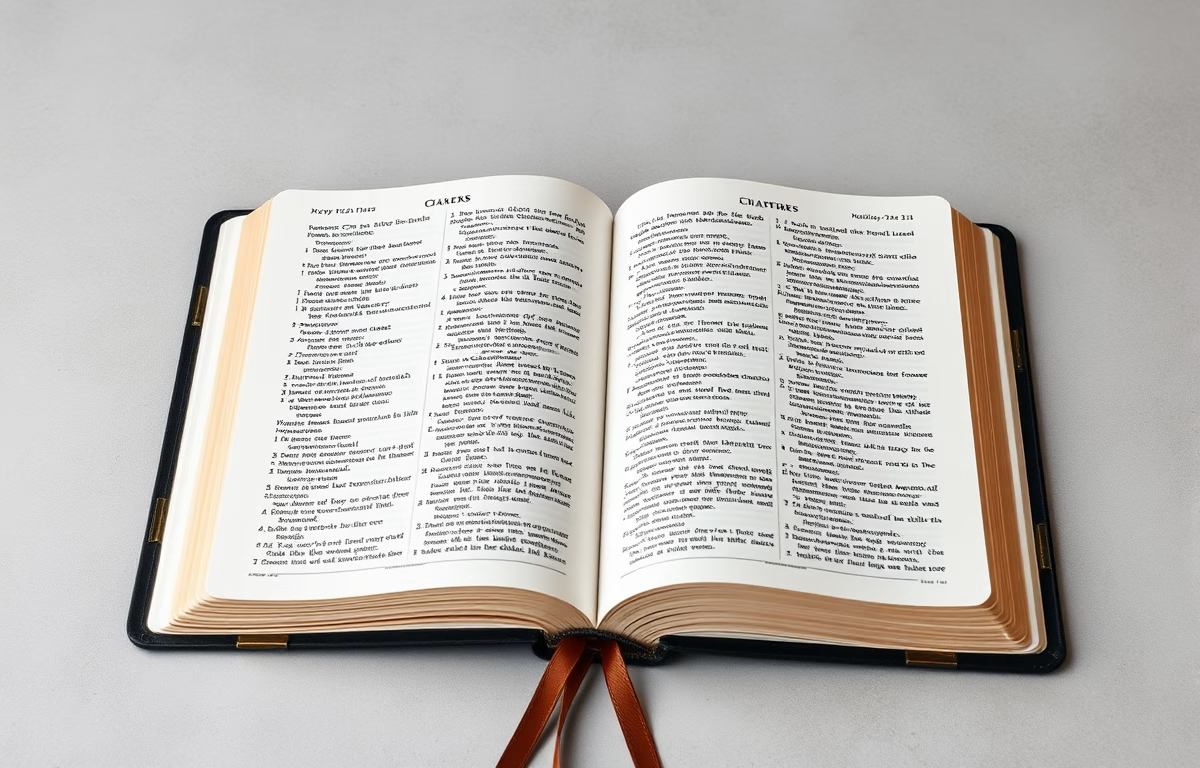
Today we will talk about bible without chapters and verses. Many Christians do not know what this means. Be on the mode of meditation as we read through God’s word. When we set aside the numbers and the labels, we can hear the story and the song as one living message. The bible without chapters and verses invites us to follow the flow of Scripture, to notice the rhythm and the connections, and to listen for God’s heart from beginning to end. As we read in this spirit, we learn to join the people in the story, to feel the rise and fall of a narrative, and to discover how passages speak to one another. This way of reading helps us see the unity of God’s message and makes it easier to apply truth in daily life. Let us come together with quiet hearts, ready to be taught and changed. We will read slowly, reflect deeply, and let the words shape us. In this set of passages and reflections we will explore themes that point us back to Jesus, show us how to live, and remind us of God’s steady love. Our aim is simple: to let Scripture be heard as God’s voice, not only as a set of references. May our time together help us grow in understanding, faith, and love as we encounter the bible without chapters and verses.
2 Timothy 3:16
“All scripture is given by inspiration of God, and is profitable for doctrine, for reproof, for correction, for instruction in righteousness. – 2 Timothy 3:16
bible without chapters and verses
The heart of Scripture in the bible without chapters and verses
When we approach the bible without chapters and verses, we are choosing to look for the heart beneath the punctuation. We want to hear the core message of Scripture without stopping to check numbers. In this way we notice how God’s words flow from creation to promise, from promise to fulfillment. We see that the Bible is not merely a list of proofs or proof texts but a living letter, a long conversation, and a story that holds us. Reading like this helps us connect big truths—what God has done, who Jesus is, and how the Spirit works among us. It also helps us trust that each part belongs to the whole and that themes—God’s love, justice, mercy, and faithfulness—link book to book. As a community, we find that the bible without chapters and verses makes the Scriptures feel more like a friend speaking, not like a book of rules and citations. We slow down and listen for tone, for repeats, for promises that echo across centuries. This practice trains our hearts to receive instruction and correction gently, because we sense the unity of God’s plan. We learn to read with both humility and curiosity. Humility, because we admit we do not own Scripture; curiosity, because we want to follow its thread. In this way we allow Scripture to form our beliefs and habits rather than using it only to win an argument. When we read the bible without chapters and verses, we open ourselves to be formed by the whole voice of God.
John 1:1
“In the beginning was the Word, and the Word was with God, and the Word was God. – John 1:1
Hebrews 4:12
“For the word of God is quick, and powerful, and sharper than any twoedged sword, piercing even to the dividing asunder of soul and spirit, and of the joints and marrow, and is a discerner of the thoughts and intents of the heart. – Hebrews 4:12
Psalm 119:105
“Thy word is a lamp unto my feet, and a light unto my path. – Psalm 119:105
Romans 15:4
“For whatsoever things were written aforetime were written for our learning, that we through patience and comfort of the scriptures might have hope. – Romans 15:4
Psalm 19:7
“The law of the LORD is perfect, converting the soul: the testimony of the LORD is sure, making wise the simple. – Psalm 19:7
Reading for flow and story in the bible without chapters and verses
We find that the bible without chapters and verses helps us follow the story like a river. Instead of jumping to isolated verses, we read paragraphs and scenes. This gives us a better sense of characters, settings, and how events build on each other. When we read the Gospels in this flow, we see Jesus’ life as a whole—his teaching, his actions, his passion, and his resurrection—without treating sayings as detached slogans. When we read the Old Testament story this way, we see how promises and failures shape a people over time. For us, reading in flow reduces the temptation to proof-text and increases the chance that we will notice development, contrast, and literary shape. We start to hear how one scene answers another. We catch themes that travel from book to book. This kind of reading asks for patience; it asks us to linger and let meaning accumulate. It also trains us to ask the right questions: Who is speaking? To whom? What happened just before? What comes after? As we learn this rhythm, the bible without chapters and verses becomes a tool for deeper comprehension. It draws us into the narrative and invites us to stand inside the story, not just consult it from the outside. Reading like this refreshes our wonder and helps the truth sink deeper into our minds and hearts.
Luke 24:27
“And beginning at Moses and all the prophets, he expounded unto them in all the scriptures the things concerning himself. – Luke 24:27
Acts 8:35
“Then Philip opened his mouth, and began at the same scripture, and preached unto him Jesus. – Acts 8:35
Matthew 5:1
“And seeing the multitudes, he went up into a mountain: and when he was set, his disciples came unto him. – Matthew 5:1
John 20:30
“And many other signs truly did Jesus in the presence of his disciples, which are not written in this book: – John 20:30
Mark 1:1
“The beginning of the gospel of Jesus Christ, the Son of God; – Mark 1:1
Finding context and meaning in the bible without chapters and verses
We have noticed how context changes everything. The bible without chapters and verses encourages us to read the lines around a verse so we can hear the full meaning. Instead of cutting a sentence down to a slogan, we ask: What led to this statement? What followed? Who was the audience? We read passages as units of meaning—stories, speeches, letters—so the message stands where it belongs. This helps slow our reading and invites us to reflect. We also learn to compare Scripture with Scripture. When a passage is hard to understand, we look at related parts of the Bible to find clarity. This is not guessing; it is careful listening. We approach the bible without chapters and verses with humility, admitting we may miss the point if we only harvest single phrases. We want to honor authorial intent and the historical moment while also asking how these words speak to our life today. Reading with context builds faithful interpretation. It keeps us from twisting scripture to say what we wish and moves us to ask what God truly intends. In our gatherings, we can read entire sections aloud, allow the story to breathe, and then talk about what it means. This practice makes the Bible less like a rulebook and more like a conversation starter with God.
Nehemiah 8:8
“So they read in the book in the law of God distinctly, and gave the sense, and caused them to understand the reading. – Nehemiah 8:8
2 Peter 1:20
“Knowing this first, that no prophecy of the scripture is of any private interpretation. – 2 Peter 1:20
Proverbs 25:2
“It is the glory of God to conceal a thing: but the honour of kings is to search out a matter. – Proverbs 25:2
Isaiah 28:10
“For precept must be upon precept, precept upon precept; line upon line, line upon line; here a little, and there a little: – Isaiah 28:10
Luke 24:45
“Then opened he their understanding, that they might understand the scriptures, – Luke 24:45
Hearing Scripture as God’s voice in the bible without chapters and verses
When we read the bible without chapters and verses, we can better hear God’s voice speaking across time. It stops being a patchwork of commands and becomes a sustained address, as if God is speaking into our lives step by step. This helps us listen prayerfully. We learn to look for how God names his people, calls them to follow, and comforts them in trouble. This way of reading also helps us recognize when God is correcting or guiding us. We can follow the pattern of call, promise, and fulfillment and notice how God’s voice shapes the community. In our group life, we can read long passages together and then share what we hear God saying. That shared listening helps us hold one another accountable and encourages growth. The bible without chapters and verses also helps us notice the tender mercy in many stories—how God seeks out the lost, speaks to the fearful, and renews hope. As we practice this listening, we become more ready to obey and to comfort others. Scripture stops being only information and becomes a living conversation that shapes our daily choices and our prayers.
John 10:27
“My sheep hear my voice, and I know them, and they follow me: – John 10:27
Psalm 119:18
“Open thou mine eyes, that I may behold wondrous things out of thy law. – Psalm 119:18
Amos 3:7
“Surely the Lord GOD will do nothing, but he revealeth his secret unto his servants the prophets. – Amos 3:7
Jeremiah 33:3
“Call unto me, and I will answer thee, and shew thee great and mighty things, which thou knowest not. – Jeremiah 33:3
Isaiah 30:21
“And thine ears shall hear a word behind thee, saying, This is the way, walk ye in it, when ye turn to the right hand, and when ye turn to the left. – Isaiah 30:21
Memorizing and meditating in the bible without chapters and verses
We find that the bible without chapters and verses supports a calm and steady habit of meditation. Instead of hunting for quick quotes, we learn to keep whole phrases and images in our hearts. This practice helps our memory hold the flow of thought and the promise behind it. Meditation is not just memorizing a line; it is turning a passage over and letting it speak to our days. When we hide God’s word in our hearts, it becomes a guard for our choices and a source of strength when we are tempted. Reading the bible without chapters and verses encourages us to carry themes rather than fragments. We meditate on a paragraph, a story, or a prayer. We use these longer pieces to shape our thinking and to guide our actions. This has practical benefits: it helps us respond in kindness, remember God’s promises in hard times, and teach others from a fuller understanding. As a community, we can work together to learn passages by heart and to reflect on them in prayer. The steady repetition of God’s words trains our minds and calms our spirits.
Psalm 119:11
“Thy word have I hid in mine heart, that I might not sin against thee. – Psalm 119:11
Joshua 1:8
“This book of the law shall not depart out of thy mouth; but thou shalt meditate therein day and night, that thou mayest observe to do according to all that is written therein: for then thou shalt make thy way prosperous, and then thou shalt have good success. – Joshua 1:8
Psalm 1:2
“But his delight is in the law of the LORD; and in his law doth he meditate day and night. – Psalm 1:2
Philippians 4:8
“Finally, brethren, whatsoever things are true, whatsoever things are honest, whatsoever things are just, whatsoever things are pure, whatsoever things are lovely, whatsoever things are of good report; if there be any virtue, and if there be any praise, think on these things. – Philippians 4:8
Colossians 3:16
“Let the word of Christ dwell in you richly in all wisdom; teaching and admonishing one another in psalms and hymns and spiritual songs, singing with grace in your hearts to the Lord; – Colossians 3:16
Worship and prayer shaped by the bible without chapters and verses
When we worship with the bible without chapters and verses, our songs and prayers are shaped by whole passages. We lift up entire Psalms or prayers instead of only single lines. This helps our worship stay rooted in truth and helps our prayers become richer and more honest. We also find that reading whole sections aloud in worship connects us to the past and present. It reminds us that prayer and praise are part of the Bible’s long conversation with God. As we sing and pray with longer texts, we feel more able to express joy, sorrow, thanks, and confession. The bible without chapters and verses prompts us to pray with context. We bring to God our full story and let Scripture shape how we speak. This practice also strengthens community: when a group reads scripture together and prays from it, we share the same spiritual language. In this way our worship is not just emotional but rooted in the faithful words God has given. It teaches us to pray according to God’s pattern and to praise with the depth that Scripture gives.
Psalm 95:1
“O come, let us sing unto the LORD: let us make a joyful noise to the rock of our salvation. – Psalm 95:1
Hebrews 10:25
“Not forsaking the assembling of ourselves together, as the manner of some is; but exhorting one another: and so much the more, as ye see the day approaching. – Hebrews 10:25
Psalm 100:4
“Enter into his gates with thanksgiving, and into his courts with praise: be thankful unto him, and bless his name. – Psalm 100:4
Matthew 6:9
“After this manner therefore pray ye: Our Father which art in heaven, Hallowed be thy name. – Matthew 6:9
Ephesians 5:19
“Speaking to yourselves in psalms and hymns and spiritual songs, singing and making melody in your heart to the Lord; – Ephesians 5:19
Teaching and preaching with care in the bible without chapters and verses
We want our teaching to reflect the whole counsel of God, not just a series of favorites. The bible without chapters and verses calls us to preach and teach whole passages, to show how ideas fit together. This encourages leaders to explain context, history, and purpose. It also helps listeners grow in patience, as they learn to follow a fuller argument instead of hunting for quick lessons. When we teach in this way, our sermons and classes become bridges from the Bible’s world to ours. We ask how a passage would have been heard long ago and then what it asks of us now. Teaching with whole passages also keeps us honest. We are less likely to take words out of context. As a community, we can read a full chapter or section together, then discuss what it says to our lives. The bible without chapters and verses helps us shape lessons that invite transformation. It moves our gatherings from information toward formation, so people leave ready to live the gospel, not just to remember a point.
2 Timothy 4:2
“Preach the word; be instant in season, out of season; reprove, rebuke, exhort with all longsuffering and doctrine. – 2 Timothy 4:2
Matthew 28:20
“Teaching them to observe all things whatsoever I have commanded you: and, lo, I am with you alway, even unto the end of the world. Amen. – Matthew 28:20
Colossians 1:28
“Whom we preach, warning every man, and teaching every man in all wisdom; that we may present every man perfect in Christ Jesus: – Colossians 1:28
Acts 20:27
“For I have not shunned to declare unto you all the counsel of God. – Acts 20:27
1 Corinthians 2:13
“Which things also we speak, not in the words which man’s wisdom teacheth, but which the Holy Ghost teacheth; comparing spiritual things with spiritual. – 1 Corinthians 2:13
Seeing unity and big themes in the bible without chapters and verses
We love how the bible without chapters and verses helps us see the big picture. The Bible has one grand story—God creating, redeeming, and renewing—and the parts point to that whole. When we read without chopping things up, we spot themes that cross books, like covenant, kingdom, law, grace, and promise. We also find patterns: God’s faithfulness, human failure, the call to repent, and the gift of mercy. This kind of reading helps us connect Genesis to Revelation and to notice how small moments echo larger truths. It encourages us to follow Jesus as the center of the story. We also discover that individual books add different angles on the same truth, helping us understand God more fully. Reading for unity strengthens our faith because it shows us God’s wise plan across time. As a group, we can talk about these themes and trace them through scripture. Doing so helps us live with hope, since we see the beginning and the end joined by God’s constant love.
Genesis 1:1
“In the beginning God created the heaven and the earth. – Genesis 1:1
Revelation 22:13
“I am Alpha and Omega, the beginning and the end, the first and the last. – Revelation 22:13
Psalm 119:160
“Thy word is true from the beginning: and every one of thy righteous judgments endureth for ever. – Psalm 119:160
John 5:39
“Search the scriptures; for in them ye think ye have eternal life: and they are they which testify of me. – John 5:39
Romans 1:16
“For I am not ashamed of the gospel of Christ: for it is the power of God unto salvation to every one that believeth; to the Jew first, and also to the Greek. – Romans 1:16
Applying Scripture to life through the bible without chapters and verses
We want the Bible to shape how we live, not just what we know. The bible without chapters and verses helps by giving us whole instructions and stories to live into. When we read larger sections, we see how belief leads to action. We see examples of mercy, justice, prayer, and practical love. That helps us move from theory to practice. Reading this way also helps us spot commands and patterns that guide daily choices. We can then ask: How would Jesus act here? What does this passage ask me to change? When we do this together, we encourage each other to try new ways of loving and serving. The bible without chapters and verses makes application natural because the meaning is found in the flow. We do not squeeze out morals from single lines; instead we follow whole teachings into life. This helps us grow as disciples who do the word and not only hear it.
James 1:22
“But be ye doers of the word, and not hearers only, deceiving your own selves. – James 1:22
Romans 12:2
“And be not conformed to this world: but be ye transformed by the renewing of your mind, that ye may prove what is that good, and acceptable, and perfect, will of God. – Romans 12:2
Micah 6:8
“He hath shewed thee, O man, what is good; and what doth the LORD require of thee, but to do justly, and to love mercy, and to walk humbly with thy God? – Micah 6:8
Proverbs 3:5
“Trust in the LORD with all thine heart; and lean not unto thine own understanding. – Proverbs 3:5
Galatians 5:22
“But the fruit of the Spirit is love, joy, peace, longsuffering, gentleness, goodness, faith, meekness, temperance: against such there is no law. – Galatians 5:22
Loving Scripture as God’s voice in the bible without chapters and verses
We grow to love Scripture when we read it as a whole voice. The bible without chapters and verses helps us fall in love with God’s words, not just the comfort lines. We find that Scripture can be tender, sharp, encouraging, and steady all at once. Reading longer passages helps us see God’s care and wisdom over time. This love also makes us ready to obey and to share Scripture with others. We want to pass on a living faith that is nourished by whole texts and sustained by scriptural rhythms. When we cherish the Bible in this way, our faith becomes rooted and our hope deepens. We are more likely to welcome correction and celebrate God’s truth. The bible without chapters and verses invites us to a lifelong friendship with God, built on listening, learning, and living out what we read.
Psalm 119:97
“O how love I thy law! it is my meditation all the day. – Psalm 119:97
Isaiah 40:8
“The grass withereth, the flower fadeth: but the word of our God shall stand for ever. – Isaiah 40:8
1 Thessalonians 2:13
“For this cause also thank we God without ceasing, because, when ye received the word of God which ye heard of us, ye received it not as the word of men, but as it is in truth, the word of God, which effectually worketh also in you that believe. – 1 Thessalonians 2:13
John 17:17
“Sanctify them through thy truth: thy word is truth. – John 17:17
1 Peter 2:2
“As newborn babes, desire the sincere milk of the word, that ye may grow thereby. – 1 Peter 2:2
Final Thoughts
I have walked with you through the idea of the bible without chapters and verses. We read longer passages, noticed connections, and learned to let Scripture speak as a whole voice. I believe this way of reading helps us grow in love for God’s word and in practical faith.
We found that when we slow down, context becomes clear, and meaning deepens. Together we learned that Scripture shapes our worship, our teaching, and our daily living. As a group, we can practice reading whole sections and let God’s story form us.
Let us keep listening, meditating, and applying the Bible’s long breath. May our hearts stay open to the steady, guiding voice of God as we read the bible without chapters and verses and live out its truth in our families, churches, and neighborhoods.
Further Reading
30 Bible Verses About Getting Closer To God (With Commentary)
30 Bible Verses About Removing People From Your Life (With Commentary)
30 Bible Verses About Israel (With Explanation)
30 Bible Verses About Being Lukewarm (With Explanation)
4 Ways to Encounter Grace and Truth: A Study on John, Chapter 4