
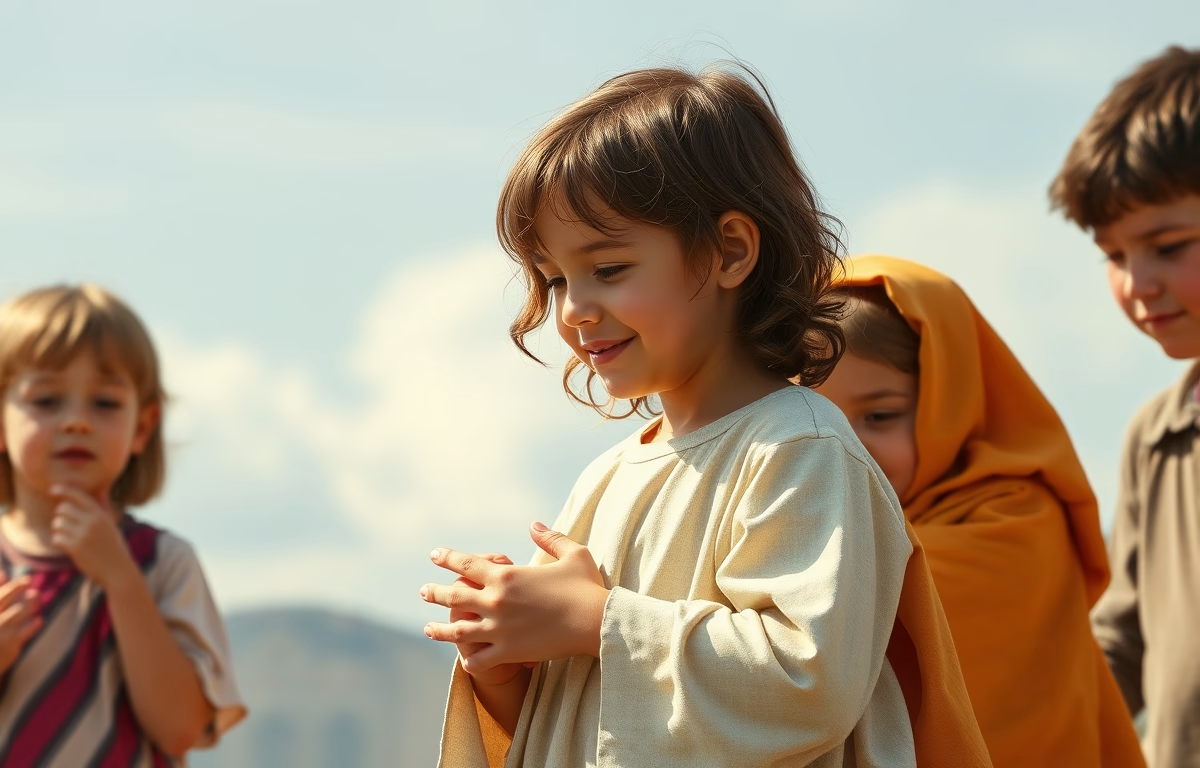
Today we will talk about bible verses for children’s behavior. Many Christians do not know how vital these verses are in shaping the character and habits of our young ones. Behavior is an essential part of growing up, and as parents and guardians, it is our job to guide them through their journey. The Bible offers us timeless wisdom, seen through the scriptures, that reveals important lessons about kindness, respect, obedience, and integrity. We can teach our children to cultivate these virtues, ensuring they can grow into well-rounded individuals. By sharing these verses with our children, we create opportunities for open discussions about empathy, accountability, and the importance of living life in accordance with God’s word. Be on the mode of meditation as we read through God’s word.
Bible Verses for Children’s Behavior
Obedience
Following the teachings of the Bible is crucial in our development. We find that obedience is not simply about following rules; it is about fostering respect and understanding towards authority. Teaching our children the importance of obedience helps them build essential life skills they will need as they grow older. The Bible encourages us to honor our parents and elders as a way to show love and loyalty. We can lead by example, demonstrating the blessings that come from compliant behavior. These scripture references remind us and our children that obedience is a pathway to wisdom and understanding.
Exodus 20:12
“Honor your father and mother, so that you may live long in the land the Lord your God is giving you.” – Exodus 20:12
Ephesians 6:1
“Children, obey your parents in the Lord, for this is right.” – Ephesians 6:1
Colossians 3:20
“Children, obey your parents in everything, for this pleases the Lord.” – Colossians 3:20
Proverbs 1:8
“Listen, my son, to your father’s instruction and do not forsake your mother’s teaching.” – Proverbs 1:8
Proverbs 6:20
“My son, keep your father’s command and do not forsake your mother’s teaching.” – Proverbs 6:20
Kindness
Our journey in instilling good behavior in our children is greatly enhanced by emphasizing kindness. Being kind is not just about small acts but encompasses empathy and compassion towards others. When we teach our children to be kind, we plant the seeds of understanding and consideration for others’ feelings. Bible verses about kindness inspire us to reflect God’s love in our daily interactions. These scriptures will resonate with our kids and help them cultivate kindness as a core value while growing up.
Galatians 5:22
“But the fruit of the Spirit is love, joy, peace, forbearance, kindness, goodness, faithfulness.” – Galatians 5:22
Proverbs 11:17
“Those who are kind benefit themselves, but the cruel bring ruin on themselves.” – Proverbs 11:17
Ephesians 4:32
“Be kind and compassionate to one another, forgiving each other, just as in Christ God forgave you.” – Ephesians 4:32
Luke 6:31
“Do to others as you would have them do to you.” – Luke 6:31
Colossians 3:12
“Therefore, as God’s chosen people, holy and dearly loved, clothe yourselves with compassion, kindness, humility, gentleness and patience.” – Colossians 3:12
Respect
Teaching respect is essential in molding our children’s behavior as it builds character and mutual understanding. Respect is at the core of harmonious relationships, and we need to encourage our children to treat individuals with dignity. The Bible clearly outlines the importance of respecting not just parents and elders, but others in our community. By sharing these valuable teachings, we create an environment where our children can develop respect for themselves and others, allowing for positivity in all their interactions.
1 Peter 2:17
“Show proper respect to everyone, love the family of believers, fear God, honor the emperor.” – 1 Peter 2:17
Romans 12:10
“Be devoted to one another in love. Honor one another above yourselves.” – Romans 12:10
Proverbs 15:33
“Wisdom’s instruction is to fear the Lord, and humility comes before honor.” – Proverbs 15:33
Ephesians 5:21
“Submit to one another out of reverence for Christ.” – Ephesians 5:21
Philippians 2:3
“Do nothing out of selfish ambition or vain conceit. Rather, in humility value others above yourselves.” – Philippians 2:3
Avoiding Anger
Anger management is another vital aspect of behavioral teaching. We often face challenging situations that can provoke anger, and it becomes important for us to guide our kids on how to navigate these emotions. The Bible instructs us on the significance of being slow to anger and offers insights on resolving conflicts peacefully. By discussing these verses with our children, we empower them to express their feelings healthily and constructively, ultimately leading to a more peaceful environment for all of us.
Ephesians 4:26
“In your anger do not sin: Do not let the sun go down while you are still angry.” – Ephesians 4:26
Proverbs 14:29
“Whoever is patient has great understanding, but one who is quick-tempered displays folly.” – Proverbs 14:29
James 1:19
“My dear brothers and sisters, take note of this: Everyone should be quick to listen, slow to speak and slow to become angry.” – James 1:19
Proverbs 15:1
“A gentle answer turns away wrath, but a harsh word stirs up anger.” – Proverbs 15:1
Proverbs 19:11
“A person’s wisdom yields patience; it is to one’s glory to overlook an offense.” – Proverbs 19:11
Forgiveness
Emphasizing forgiveness is crucial in guiding our children towards a positive behavior. We live in a world where misunderstandings and conflicts occur, making it imperative for our children to learn the value of forgiveness. The Bible teaches us about God’s ultimate forgiveness and encourages us to practice the same towards others. By reinforcing the principles of forgiveness, we create resilient individuals who can repair relationships and foster love in their hearts. These verses on forgiveness will empower us to instill this vital lesson in our children’s lives.
Matthew 6:14
“For if you forgive other people when they sin against you, your heavenly Father will also forgive you.” – Matthew 6:14
Colossians 3:13
“Bear with each other and forgive one another if any of you has a grievance against someone. Forgive as the Lord forgave you.” – Colossians 3:13
Ephesians 4:32
“Be kind and compassionate to one another, forgiving each other, just as in Christ God forgave you.” – Ephesians 4:32
Luke 6:37
“Do not judge, and you will not be judged. Do not condemn, and you will not be condemned. Forgive, and you will be forgiven.” – Luke 6:37
Matthew 18:21
“Then Peter came to Jesus and asked, ‘Lord, how many times shall I forgive my brother or sister who sins against me? Up to seven times?’” – Matthew 18:21
Honesty
Honesty is a fundamental value that plays a critical role in our children’s behavior. Teaching them to embrace honesty fosters integrity and builds trust in their relationships. The Bible mentions the importance of truth and points out that honesty leads to a fruitful life. We have the wonderful opportunity to guide our children into understanding that honesty not only builds character but also enriches their connection with others. These verses underscore honesty as a treasured virtue that will benefit them throughout their lives.
Proverbs 12:22
“The Lord detests lying lips, but he delights in people who are trustworthy.” – Proverbs 12:22
Proverbs 19:1
“Better the poor whose walk is blameless than a fool whose lips are perverse.” – Proverbs 19:1
Ephesians 4:25
“Therefore each of you must put off falsehood and speak truthfully to your neighbor, for we are all members of one body.” – Ephesians 4:25
Proverbs 21:6
“A fortune made by a lying tongue is a fleeting vapor and a deadly snare.” – Proverbs 21:6
John 8:32
“Then you will know the truth, and the truth will set you free.” – John 8:32
Gratitude
Gratitude is an essential aspect of developing positive behavior. It encourages our children to appreciate what they have and cultivates a joyful heart. The Bible speaks extensively about gratitude, putting emphasis on thanksgiving in various situations. By teaching our children to express gratitude, we help them recognize the blessings in their lives while fostering humility and appreciation for others. These verses provide an opportunity for our kids to learn the significance of being thankful, transforming their perspectives toward life.
1 Thessalonians 5:18
“Give thanks in all circumstances; for this is God’s will for you in Christ Jesus.” – 1 Thessalonians 5:18
Colossians 3:15
“Let the peace of Christ rule in your hearts, since as members of one body you were called to peace. And be thankful.” – Colossians 3:15
Psalms 107:1
“Give thanks to the Lord, for he is good; his love endures forever.” – Psalms 107:1
Philippians 4:6
“Do not be anxious about anything, but in every situation, by prayer and petition, with thanksgiving, present your requests to God.” – Philippians 4:6
Psalms 136:1
“Give thanks to the Lord, for he is good. His love endures forever.” – Psalms 136:1
Trust and Faith
Encouraging trust and faith in God is paramount in shaping children’s behavior. It’s important for our children to understand that they can rely on God’s word and promises. Building their trust in God leads them to make wise decisions guided by faith rather than fear. The Bible teaches us about the importance of believing in God and His plans for us, and it can really help guide our children through the ups and downs of life. By sharing these verses, we create a firm foundation for our kids, helping them develop strong faith and trust in God.
Proverbs 3:5
“Trust in the Lord with all your heart and lean not on your own understanding.” – Proverbs 3:5
Psalms 37:5
“Commit your way to the Lord; trust in him and he will do this.” – Psalms 37:5
Hebrews 11:1
“Now faith is confidence in what we hope for and assurance about what we do not see.” – Hebrews 11:1
Philippians 4:19
“And my God will meet all your needs according to the riches of his glory in Christ Jesus.” – Philippians 4:19
Psalms 56:3
“When I am afraid, I put my trust in you.” – Psalms 56:3
Final Thoughts
In conclusion, as we explored the Bible verses for children’s behavior, we discovered the essential principles to teach our young ones. These verses not only provide guidance on obedience, kindness, and respect but also outline the importance of embracing virtues like honesty and gratitude. Each scripture serves as a stepping stone for our children to build a strong moral foundation anchored in faith. It is our responsibility to nurture these biblical teachings, allowing our children to flourish in character and conduct. Together, we can create an environment that encourages growth in love, reflection on God’s word, and healthy relationships.
By sharing these verses with our children and discussing their meanings, we empower them to develop positive behaviors throughout their lives. This journey is not just about rules and regulations but fostering a loving and supportive community rooted in biblical teachings. As we move forward, let us remind ourselves to embody these values and celebrate every step our children take in their growth.
May we strive to live by example as we guide our children through these important lessons, reflecting God’s love and wisdom. Together, as families and communities, we can instill the teachings that lead to a brighter future for our children.
Further Reading
30 Bible Verses About Getting Closer To God (With Commentary)
30 Bible Verses About Removing People From Your Life (With Commentary)
30 Bible Verses About Israel (With Explanation)
30 Bible Verses About Being Lukewarm (With Explanation)
4 Ways to Encounter Grace and Truth: A Study on John, Chapter 4