
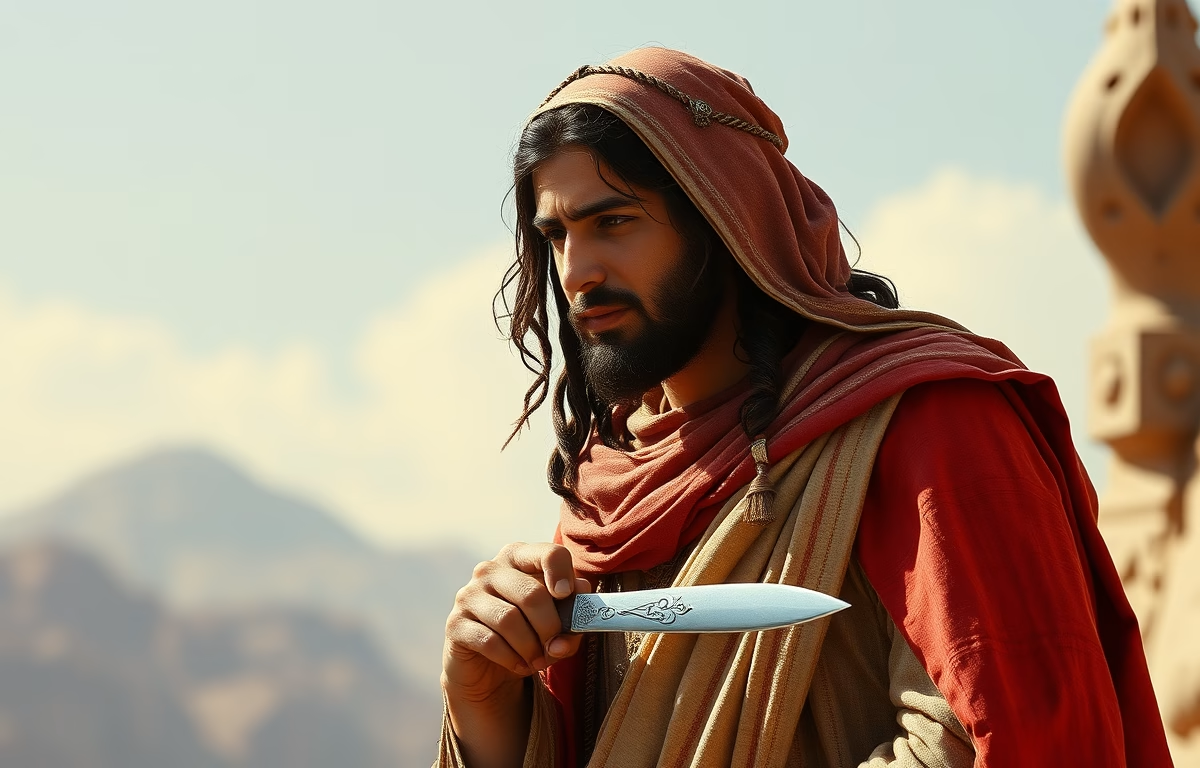
Today we will talk about rahab in the bible verses. Many Christians do not know what this means. Be on the mode of meditation as we read through God’s word. Rahab is a surprising and powerful figure in Scripture. She is introduced as a woman of Jericho who made a courageous choice to hide Israel’s spies, showed faith in the Lord, and became part of God’s unfolding story. As we reflect on rahab in the bible verses, we see themes of risk, faith, mercy, and redemption. Her story reminds us that God can use anyone—no matter their past or standing—to accomplish His purposes. We will read, reflect, and draw encouragement from how God met Rahab, preserved her household, and even placed her in the line of David and ultimately Jesus. Let us approach these verses with open hearts, ready to learn from rahab in the bible verses and to be encouraged that God’s grace reaches far and wide.
Hebrews 11:31
“By faith the harlot Rahab perished not with them that believed not, when she had received the spies with peace.” – Hebrews 11:31
rahab in the bible verses
Rahab’s Faith and Trust
In our reading of rahab in the bible verses, we discover a clear example of faith that surprises us. We often think faith looks one way—quiet, polished, and regular—but Rahab’s faith was raw, bold, and rooted in a decision to trust God despite her situation. When we place ourselves in her shoes, we can feel the risk and the hope that shaped her choices. We see that faith is not only what we say with our mouths but what we do with our hands. Rahab heard about the power of Israel’s God and made an active choice to support His servants. As we study rahab in the bible verses, we realize that faith can start from a place of little knowledge but deep conviction. We are encouraged that God honors turning points of faith, even when they come from unexpected people. Our faith journey can be messy; yet, like Rahab, we can open our hearts to God’s truth and act on it. Her trust led to rescue and new community. As we read these verses together, we lean into the way rahab in the bible verses shows us that faith often requires courage, steps away from our past, and a readiness to welcome God’s promise.
Joshua 2:1
“And Joshua the son of Nun sent out of Shittim two men to spy secretly, saying, Go view the land, even Jericho. And they went, and came into an harlot’s house, named Rahab, and lodged there.” – Joshua 2:1
Joshua 2:4
“And the woman took the two men, and hid them, and said thus, There came men unto me, but I wist not whence they were:” – Joshua 2:4
Joshua 2:6
“And she had brought them up to the roof, and hid them with the stalks of flax which she had laid in order upon the roof.” – Joshua 2:6
Hebrews 11:31
“By faith the harlot Rahab perished not with them that believed not, when she had received the spies with peace.” – Hebrews 11:31
James 2:25
“Likewise also was not Rahab the harlot justified by works, when she had received the messengers, and had sent them out another way?” – James 2:25
Rahab’s Courage and Risk
When we study rahab in the bible verses, we are struck by the sheer courage it took for her to act as she did. We think of the danger in hiding spies in a city under kingly threat. Rahab risked her safety and reputation to protect God’s servants. As a group, we can imagine the inner conversation she might have had — weighing fear against conviction. This shows us that courage often looks like a quiet choice to protect what we believe is right, even when it costs us. We learn that courage can come from hearing about God’s deeds and deciding to stand with Him. In these verses about rahab in the bible verses, her bravery is not a one-off moment but a decisive turning point that reshaped her life and her family’s future. We can take comfort that when we step out in courage for God, He sees the risk we take and can turn it into rescue. Rahab’s story invites us to consider how we might act boldly in our own lives — to protect, to help, and to align our choices with God’s purposes despite real danger.
Joshua 2:3
“And the king of Jericho sent unto Rahab, saying, Bring forth the men that are come to thee, which are entered into thine house: for they be come to search out all the country.” – Joshua 2:3
Joshua 2:9
“And she said unto the men, I know that the LORD hath given you the land, and that your terror is fallen upon us, and that all the inhabitants of the land do faint because of you.” – Joshua 2:9
Joshua 2:11
“And as soon as we had heard these things, our hearts did melt, neither did there remain any more courage in any man, because of you: for the LORD your God, he is God in heaven above, and in earth beneath.” – Joshua 2:11
Joshua 2:6
“And she had brought them up to the roof, and hid them with the stalks of flax which she had laid in order upon the roof.” – Joshua 2:6
Joshua 2:18
“And she said unto them, Swear unto me by the LORD, since I have showed you kindness, that ye will also show kindness unto my father’s house, and give me a true token…” – Joshua 2:18
Rahab’s Redemption and New Identity
As we reflect together on rahab in the bible verses, we are moved by how God transforms a life. Rahab’s past did not disqualify her from becoming part of God’s people. Instead, her choices opened the door to a new identity and a place in Israel. This truth comforts us: our past does not have the last word when we respond to God. We see rahab in the bible verses as a story of redemption — someone whom God welcomed and used. When we read these passages, we notice how her life changes from outsider to insider, from a resident of Jericho to dwelling among God’s people. We can claim hope from her example because God can rewrite our story too. The transformation also shows how faith leads to belonging; Rahab’s faith led to action, which led to rescue, which led to a new standing. We are encouraged to believe that God’s grace reaches into our most difficult places and reorients our future. In the end, rahab in the bible verses helps us trust God’s power to restore and reassign meaning to our lives.
Joshua 6:25
“And Joshua saved Rahab the harlot alive, and her father’s house, and all that she had; and she dwelleth in Israel even unto this day; because she hid the messengers which Joshua sent to spy out Jericho.” – Joshua 6:25
Joshua 6:22
“And Joshua said unto the two men that had spied out the country, Go into the harlot’s house, and bring out thence the woman, and all that she hath, as ye sware unto her.” – Joshua 6:22
Joshua 6:23
“And the young men that were spies went in, and brought out Rahab, and her father, and her mother, and her brethren, and all that she had; and they brought out all her kindred, and left them without the camp of Israel.” – Joshua 6:23
Matthew 1:5
“And Salmon begat Booz of Rachab; and Booz begat Obed of Ruth; and Obed begat Jesse,” – Matthew 1:5
Hebrews 11:31
“By faith the harlot Rahab perished not with them that believed not, when she had received the spies with peace.” – Hebrews 11:31
Rahab’s Covenant and Promise
When we read rahab in the bible verses, one of the clear moments is the covenant she made with the spies. She asked them for protection for her household and received a promise in return. This exchange shows us how agreements of faith and mercy can be practical and binding. We notice that Rahab did not just trust silently; she negotiated a sign—a scarlet cord—and asked for a guarantee. We can relate to that desire for assurance when we make a brave choice. The verses describing this covenant teach us that God’s people often make promises and signs that bind communities together. In the story of rahab in the bible verses, the cord becomes a lifeline, a physical marker of faith and mercy that stretched across an uncertain moment. As we consider our own covenants—prayers, commitments, and agreements—we are reminded that God honors promises made in faith and often turns them into instruments of protection and welcome. The story encourages us to be clear, honest, and faithful when we seek mercy and when we extend it to others.
Joshua 2:12
“Now therefore, I pray you, swear unto me by the LORD, since I have shewed you kindness, that ye will also shew kindness unto my father’s house, and give me a true token:” – Joshua 2:12
Joshua 2:13
“And that ye will save alive my father, and my mother, and my brethren, and my sisters, and all that they have, and deliver our lives from death.” – Joshua 2:13
Joshua 2:18
“And she said unto them, Swear unto me by the LORD, since I have showed you kindness, that ye will also shew kindness unto my father’s house, and give me a true token;” – Joshua 2:18
Joshua 6:25
“And Joshua saved Rahab the harlot alive, and her father’s house, and all that she had; and she dwelleth in Israel even unto this day; because she hid the messengers which Joshua sent to spy out Jericho.” – Joshua 6:25
Joshua 2:14
“And they said unto her, Our life for yours if ye utter not this our business. And it shall be, when the LORD hath given us the land, that we will deal kindly and truly with thee.” – Joshua 2:14
Rahab in God’s Plan and Purpose
As we study rahab in the bible verses, we see how God weaves unexpected people into His plans. Rahab’s life intersects with the bigger story of Israel’s entry into the Promised Land, and beyond that, into the lineage of David and ultimately Jesus. This shows us that God’s purposes frequently include surprising turns—people we might overlook become essential. We love that the story of rahab in the bible verses teaches us about divine creativity: God uses what others discard. When we remember that Rahab became part of the family line leading to the Messiah, we are reminded that no life is outside God’s plan for redemption. We feel encouraged to believe that the ways God works are wider than we imagine, and that our small acts of faith can echo into eternity. Together, we can trust that behaving faithfully in our moment matters in God’s larger purpose. Rahab’s place in Scripture invites us to imagine how our choices now may fit into a much greater, gracious design.
Matthew 1:5
“And Salmon begat Booz of Rachab; and Booz begat Obed of Ruth; and Obed begat Jesse,” – Matthew 1:5
Hebrews 11:31
“By faith the harlot Rahab perished not with them that believed not, when she had received the spies with peace.” – Hebrews 11:31
James 2:25
“Likewise also was not Rahab the harlot justified by works, when she had received the messengers, and had sent them out another way?” – James 2:25
Joshua 6:25
“And Joshua saved Rahab the harlot alive, and her father’s house, and all that she had; and she dwelleth in Israel even unto this day; because she hid the messengers which Joshua sent to spy out Jericho.” – Joshua 6:25
Psalm 87:4
“I will make mention of Rahab and Babylon to them that know me: behold Philistia, and Tyre, with Ethiopia; this man was born there.” – Psalm 87:4
Rahab’s Role in Israel’s History
When we think together about rahab in the bible verses, we see her as part of Israel’s formative moments. The fall of Jericho and the entry into the Promised Land were turning points, and Rahab’s action helped shape the outcome. We learn that single acts of fidelity can have historical effects. Studying rahab in the bible verses reminds us that individual people matter in community history. Rahab’s rescue and incorporation into Israel demonstrate how God rebuilds communities by welcoming those who turn toward Him. When we read the story, we see the practical consequences: her household was spared, she was brought into the assembly, and generations later her name appears in the genealogy of Jesus. This teaches us that God’s mercy can rewrite destiny not just for individuals but for nations. As we reflect, we are inspired to be mindful of how our decisions and kindnesses might contribute to a larger story of restoration for our families and communities.
Joshua 6:22
“And Joshua said unto the two men that had spied out the country, Go into the harlot’s house, and bring out thence the woman, and all that she hath, as ye sware unto her.” – Joshua 6:22
Joshua 6:23
“And the young men that were spies went in, and brought out Rahab, and her father, and her mother, and her brethren, and all that she had; and they brought out all her kindred, and left them without the camp of Israel.” – Joshua 6:23
Joshua 6:25
“And Joshua saved Rahab the harlot alive, and her father’s house, and all that she had; and she dwelleth in Israel even unto this day; because she hid the messengers which Joshua sent to spy out Jericho.” – Joshua 6:25
Joshua 2:1
“And Joshua the son of Nun sent out of Shittim two men to spy secretly, saying, Go view the land, even Jericho. And they went, and came into an harlot’s house, named Rahab, and lodged there.” – Joshua 2:1
Joshua 2:14
“And they said unto her, Our life for yours if ye utter not this our business. And it shall be, when the LORD hath given us the land, that we will deal kindly and truly with thee.” – Joshua 2:14
Rahab as Ancestor of Jesus
As we reflect on rahab in the bible verses, one of the most striking truths is that she appears in the genealogy leading to Christ. This tells us that God’s plan of redemption is inclusive and surprising. We, as readers, find hope in seeing how the lineage of Jesus includes people with complicated pasts, showing that grace rewrites genealogy. Rahab’s inclusion in Matthew’s genealogy highlights that Jesus’ family line is made from real people, with real stories, real struggles, and real repentance. When we study rahab in the bible verses, we are invited to see how God can use every life for His redemptive purposes. We are humbled and encouraged that none of us are outside hope. The presence of Rahab in this line also helps us understand that Jesus’ mission reaches into the marginalized and the unexpected, making family out of those who turn toward God with faith.
Matthew 1:5
“And Salmon begat Booz of Rachab; and Booz begat Obed of Ruth; and Obed begat Jesse,” – Matthew 1:5
Joshua 6:25
“And Joshua saved Rahab the harlot alive, and her father’s house, and all that she had; and she dwelleth in Israel even unto this day; because she hid the messengers which Joshua sent to spy out Jericho.” – Joshua 6:25
Hebrews 11:31
“By faith the harlot Rahab perished not with them that believed not, when she had received the spies with peace.” – Hebrews 11:31
James 2:25
“Likewise also was not Rahab the harlot justified by works, when she had received the messengers, and had sent them out another way?” – James 2:25
Joshua 2:12
“Now therefore, I pray you, swear unto me by the LORD, since I have shewed you kindness, that ye will also shew kindness unto my father’s house, and give me a true token:” – Joshua 2:12
Rahab and Justification by Faith and Works
In our study of rahab in the bible verses, we encounter a healthy tension between faith and works. The New Testament references to Rahab (in Hebrews and James) help us see how faith and actions work together. We, as a community of readers, learn that Rahab’s belief in God moved her to hide the spies and to act in ways that demonstrated her trust. This shows that genuine faith produces tangible deeds. Reading rahab in the bible verses challenges us to think about our own faith — is it only words, or does it lead to loving action that aligns with God’s will? Rahab becomes an example of faith that is active, showing that when we believe, our choices naturally follow. This teaches us that justification involves both a trusting heart and actions that reveal the reality of that trust. As we reflect together, we encourage one another to live beliefs that are seen and counted, just as Rahab’s faith was seen and honored.
Hebrews 11:31
“By faith the harlot Rahab perished not with them that believed not, when she had received the spies with peace.” – Hebrews 11:31
James 2:25
“Likewise also was not Rahab the harlot justified by works, when she had received the messengers, and had sent them out another way?” – James 2:25
Joshua 2:12
“Now therefore, I pray you, swear unto me by the LORD, since I have shewed you kindness, that ye will also shew kindness unto my father’s house, and give me a true token:” – Joshua 2:12
Joshua 2:14
“And they said unto her, Our life for yours if ye utter not this our business. And it shall be, when the LORD hath given us the land, that we will deal kindly and truly with thee.” – Joshua 2:14
Joshua 2:18
“And she said unto them, Swear unto me by the LORD, since I have showed you kindness, that ye will also show kindness unto my father’s house, and give me a true token…” – Joshua 2:18
Rahab’s Household and Community
When we meditate on rahab in the bible verses, one of the heartening details is how her faith affected more than just herself — it touched her entire household. We see the ripple effect of one person’s decision: protection and new belonging for family members. This encourages us to believe that sincere steps of faith can bless not only individuals but whole communities. The verses about rahab in the bible verses show us practical outcomes: her family was spared and brought into the people of God. As we reflect together, we consider how our own choices might protect, witness to, or benefit those around us. Rahab’s story reminds us that faithfulness isn’t private; it reshapes family stories and opens doors for new generations. We are invited to act in ways that extend mercy and protection to our households, trusting God to honor faithful risks with community-sized grace.
Joshua 6:23
“And the young men that were spies went in, and brought out Rahab, and her father, and her mother, and her brethren, and all that she had; and they brought out all her kindred, and left them without the camp of Israel.” – Joshua 6:23
Joshua 6:25
“And Joshua saved Rahab the harlot alive, and her father’s house, and all that she had; and she dwelleth in Israel even unto this day; because she hid the messengers which Joshua sent to spy out Jericho.” – Joshua 6:25
Joshua 2:13
“And that ye will save alive my father, and my mother, and my brethren, and my sisters, and all that they have, and deliver our lives from death.” – Joshua 2:13
Joshua 2:18
“And she said unto them, Swear unto me by the LORD, since I have showed you kindness, that ye will also show kindness unto my father’s house, and give me a true token;” – Joshua 2:18
Joshua 6:22
“And Joshua said unto the two men that had spied out the country, Go into the harlot’s house, and bring out thence the woman, and all that she hath, as ye sware unto her.” – Joshua 6:22
Rahab in Prophetic and Poetic Imagery
As we read rahab in the bible verses, we notice that the name Rahab appears outside her personal story too—in poetry and prophecy. In some passages, “Rahab” is used as a symbol for chaotic powers or for Egypt, showing how the word carried layered meanings. When we study these verses, we gain a richer view of how biblical language works: a personal name can also become a symbol in God’s poetic speech. We like that rahab in the bible verses therefore invites multiple layers of reflection—historical, theological, and poetic. The prophetic uses remind us that God speaks through images to teach big truths, and the personal story of Rahab complements those images by adding a human testimony to God’s power over chaos and nations. Together we can appreciate how Scripture uses the life of a woman from Jericho and the symbolism of a name to point us to God’s control, mercy, and redemptive artistry.
Psalm 87:4
“I will make mention of Rahab and Babylon to them that know me: behold Philistia, and Tyre, with Ethiopia; this man was born there.” – Psalm 87:4
Isaiah 51:9
“Awake, awake, put on strength, O arm of the LORD; awake, as in the ancient days, in the generations of old. Art thou not it that hath cut Rahab, and wounded the dragon?” – Isaiah 51:9
Isaiah 30:7
“For the Egyptians shall help in vain, and to no purpose: therefore have I called her Rahab that sat still.” – Isaiah 30:7
Joshua 2:1
“And Joshua the son of Nun sent out of Shittim two men to spy secretly, saying, Go view the land, even Jericho. And they went, and came into an harlot’s house, named Rahab, and lodged there.” – Joshua 2:1
Joshua 6:20
“So the people shouted when the priests blew with the trumpets: and it came to pass, when the people heard the sound of the trumpet, and the people shouted with a great shout, that the wall fell down flat, so that the people went up into the city, every man straight before him, and they took the city.” – Joshua 6:20
Final Thoughts
I have enjoyed walking through these passages with you and focusing on rahab in the bible verses. Her life reminds me that God looks for faith and can use anyone who turns toward Him. We see a woman who believed, acted, and was welcomed into God’s story.
We can take comfort that our past does not disqualify us from God’s purposes. Like Rahab, our choices can bring rescue and renewal to ourselves and to those around us. We are encouraged to act in faith, even when the stakes are high.
May we hold fast to the lessons of rahab in the bible verses: faith that moves us to action, courage that faces danger for the sake of God’s work, and hope that God can weave our stories into His greater plan. Let us go forward together, encouraged and ready to live out our faith.
Further Reading
30 Bible Verses About Getting Closer To God (With Commentary)
30 Bible Verses About Removing People From Your Life (With Commentary)
30 Bible Verses About Israel (With Explanation)
30 Bible Verses About Being Lukewarm (With Explanation)
4 Ways to Encounter Grace and Truth: A Study on John, Chapter 4